
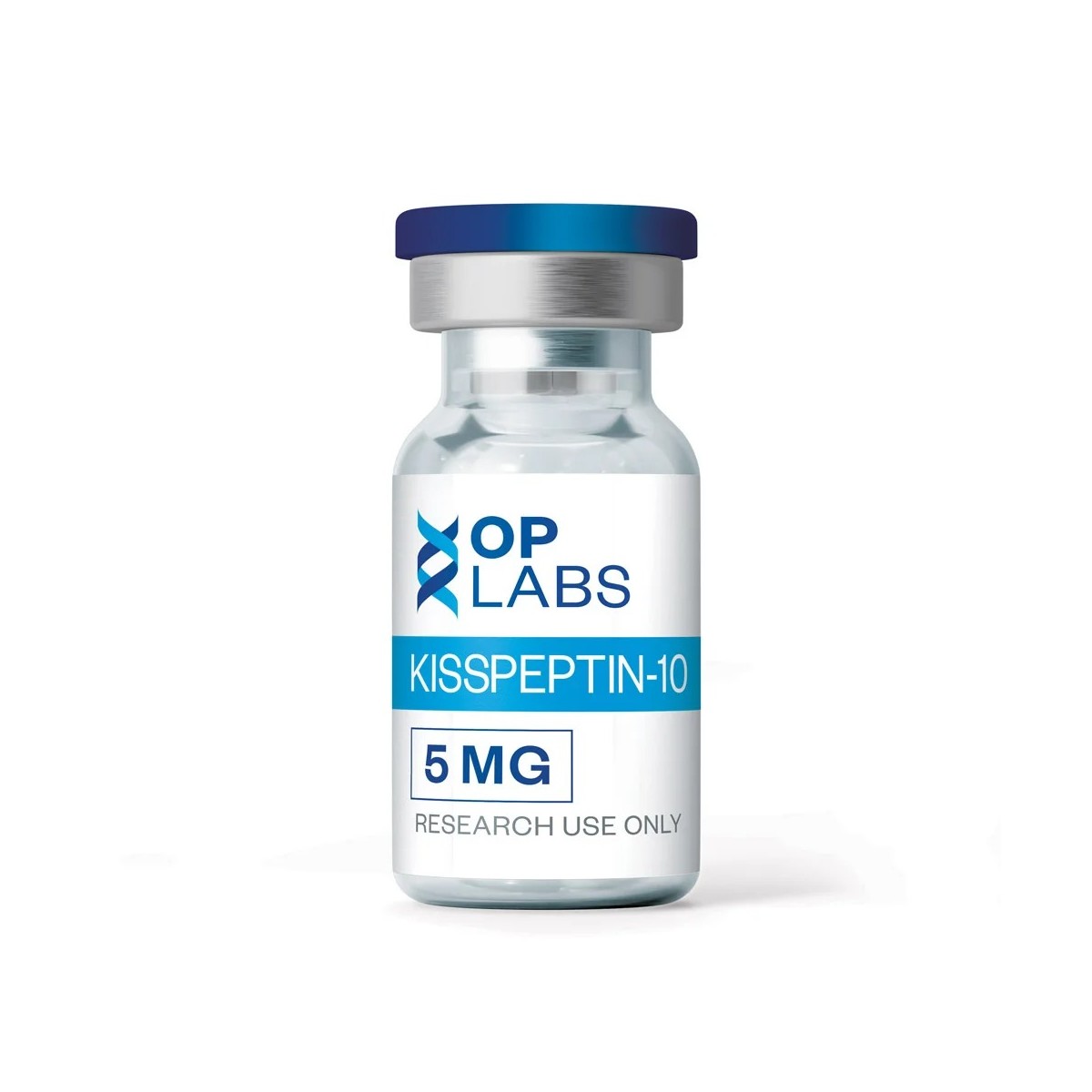

Kisspeptin-10 is a specialised research peptide used in scientific investigation of hypothalamic–pituitary–gonadal (HPG) axis signalling, receptor-mediated neuroendocrine regulation, and gonadotropin-releasing hormone (GnRH) pathway activity.
Kisspeptin-10 is a synthetic decapeptide corresponding to the C-terminal region of the endogenous KiSS-1 gene product. It represents the minimal bioactive fragment commonly used in research settings to study kisspeptin-mediated signalling independent of longer precursor peptides.
In biochemical and cellular research systems, Kisspeptin-10 interacts with the KISS1 receptor (also known as GPR54), a G-protein-coupled receptor expressed in hypothalamic and peripheral tissues. Experimental studies investigate receptor binding, downstream signalling cascades, and neuroendocrine pathway activation under controlled conditions. Observed molecular responses are dependent on experimental design, concentration, and model system, and are used to examine receptor-mediated signalling rather than defined physiological or clinical outcomes.
Applications in Research
As a molecular probe for studying KISS1 receptor binding and activation
Investigation of hypothalamic–pituitary–gonadal (HPG) axis signalling pathways
In vitro studies examining neuropeptide-mediated receptor signalling
Use as a reference compound in neuroendocrine and reproductive signalling research
Precautions & Notes
Experimental behaviour of MOTS-c is influenced by metabolic state, cell type, and peptide concentration.
Buffer composition, pH, and ionic strength may affect peptide stability.
Appropriate controls are recommended.
Intended strictly for laboratory research use.
Kisspeptin-10 is a specialised research peptide used in scientific investigation of hypothalamic–pituitary–gonadal (HPG) axis signalling, receptor-mediated neuroendocrine regulation, and gonadotropin-releasing hormone (GnRH) pathway activity.

@CUSTOMER_NAME@
@AUTHOR_PROFILE@ @COMMENT_ISO_COUNTRY@@COMMENT_TITLE@
@COMMENT_COMMENT@