
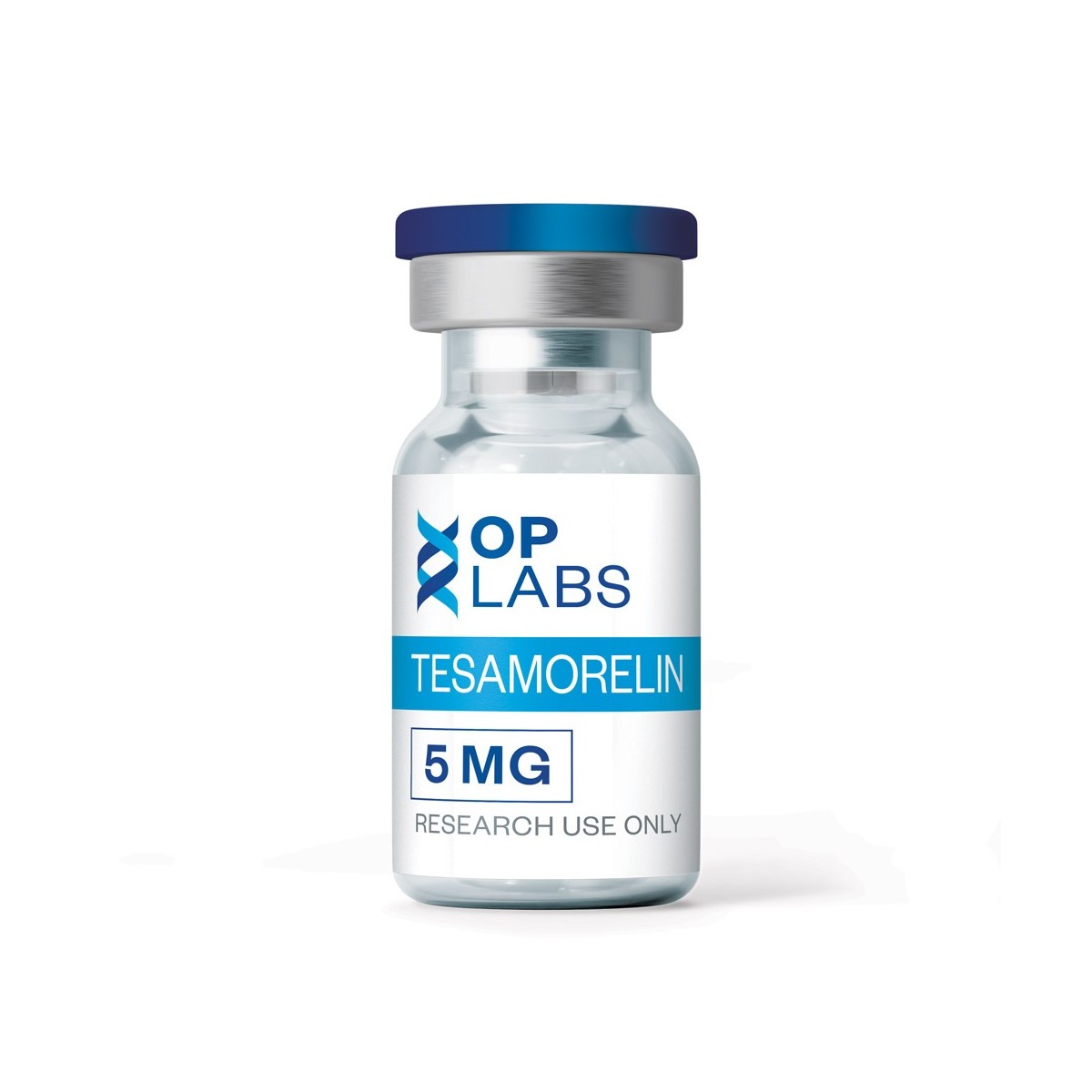

Tesamorelin is a synthetic growth hormone–releasing hormone (GHRH) analogue developed for experimental investigation of pituitary receptor–mediated signalling, growth hormone regulation, and downstream endocrine pathways.
Tesamorelin is a synthetic peptide analogue of human growth hormone–releasing hormone (GHRH 1–44) designed for experimental investigation of hypothalamic–pituitary signalling and growth hormone regulation. Structural modifications enhance stability relative to native GHRH, making Tesamorelin suitable for controlled laboratory research.
In biochemical and cellular research systems, Tesamorelin interacts with the GHRH receptor expressed on pituitary-derived cells, activating intracellular signalling cascades associated with growth hormone synthesis and secretion. Experimental studies examine receptor binding kinetics, cAMP-mediated signalling, and downstream transcriptional responses under defined exposure conditions. Observed effects are dependent on concentration, duration, and experimental model and are used to investigate GHRH receptor signalling rather than defined physiological outcomes.
Applications in Research
As a molecular probe for studying GHRH receptor activation and signalling pathways.
Investigation of growth hormone regulatory mechanisms in pituitary cell models.
In vitro studies examining peptide stability and receptor selectivity.
Use as a reference compound in neuroendocrine and peptide signalling research.
Tesamorelin is a synthetic growth hormone–releasing hormone (GHRH) analogue developed for experimental investigation of pituitary receptor–mediated signalling, growth hormone regulation, and downstream endocrine pathways.


@CUSTOMER_NAME@
@AUTHOR_PROFILE@ @COMMENT_ISO_COUNTRY@@COMMENT_TITLE@
@COMMENT_COMMENT@