
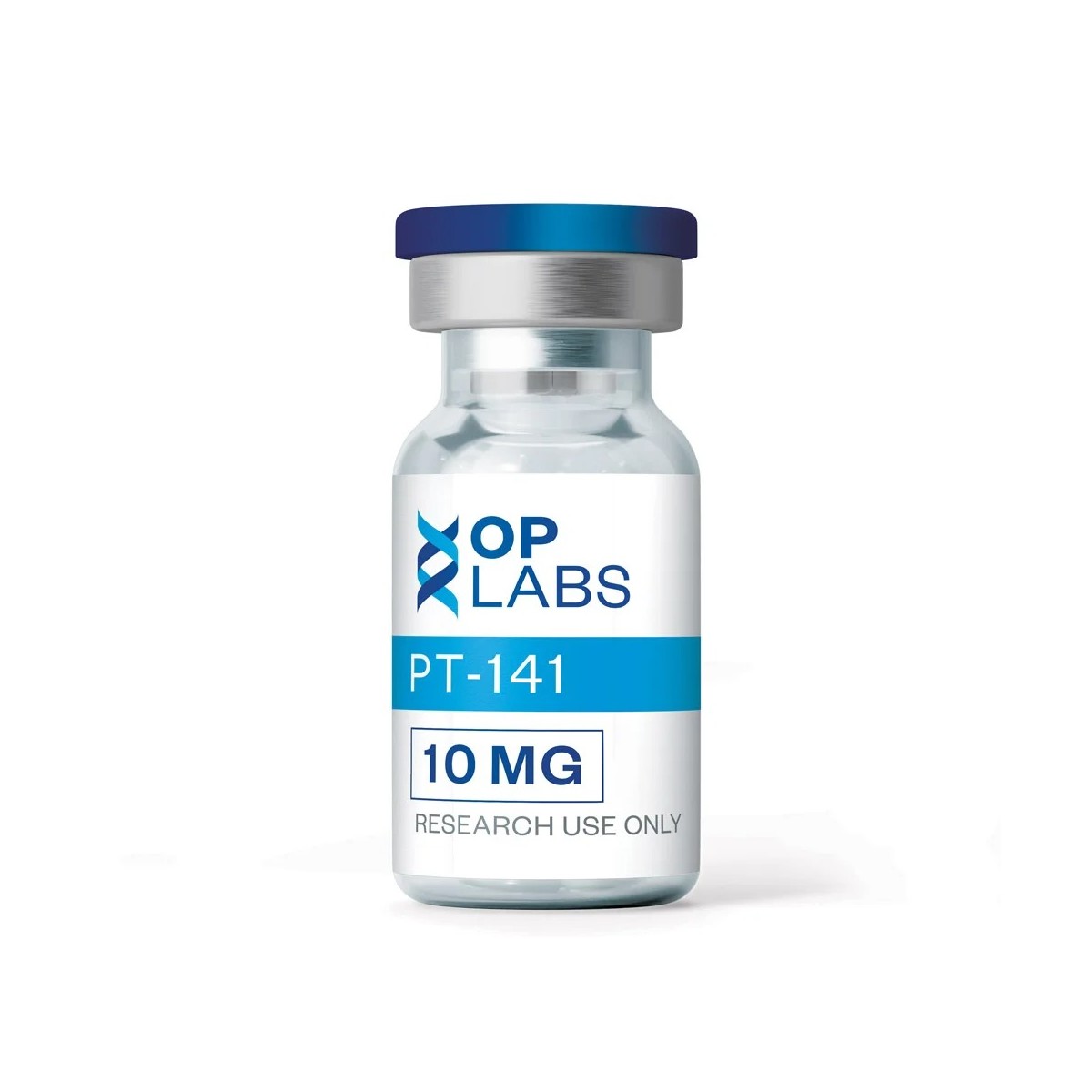

PT-141 is a specialised synthetic melanocortin peptide developed for advanced scientific exploration of melanocortin receptor signalling (MC3R / MC4R) and central neuropeptide pathways, commonly studied in models of motivation, reward, and neuroendocrine signalling.
PT-141 is a synthetic cyclic heptapeptide derived from melanocortin peptides and developed for experimental investigation of melanocortin receptor–mediated signalling pathways. It is structurally related to Melanotan II but exhibits distinct receptor selectivity and signalling characteristics.
In biochemical and cellular research systems, PT-141 interacts primarily with melanocortin receptors (MC1R, MC3R, MC4R), initiating intracellular signalling cascades associated with cAMP production and downstream transcriptional regulation. Experimental studies investigate receptor binding affinity, signalling bias, and comparative behaviour relative to other melanocortin analogues. Observed molecular responses depend on concentration, exposure duration, and experimental model.
Applications in Research
As a molecular probe for studying melanocortin receptor signalling
Investigation of GPCR-mediated intracellular signalling pathways
In vitro studies examining receptor selectivity and peptide stability
Use as a reference compound in neuroendocrine and peptide signalling research
Precautions & Notes
Experimental behaviour of MOTS-c is influenced by metabolic state, cell type, and peptide concentration.
Buffer composition, pH, and ionic strength may affect peptide stability.
Appropriate controls are recommended.
Intended strictly for laboratory research use.
PT-141 is a specialised synthetic melanocortin peptide developed for advanced scientific exploration of melanocortin receptor signalling (MC3R / MC4R) and central neuropeptide pathways, commonly studied in models of motivation, reward, and neuroendocrine signalling.



@CUSTOMER_NAME@
@AUTHOR_PROFILE@ @COMMENT_ISO_COUNTRY@@COMMENT_TITLE@
@COMMENT_COMMENT@