
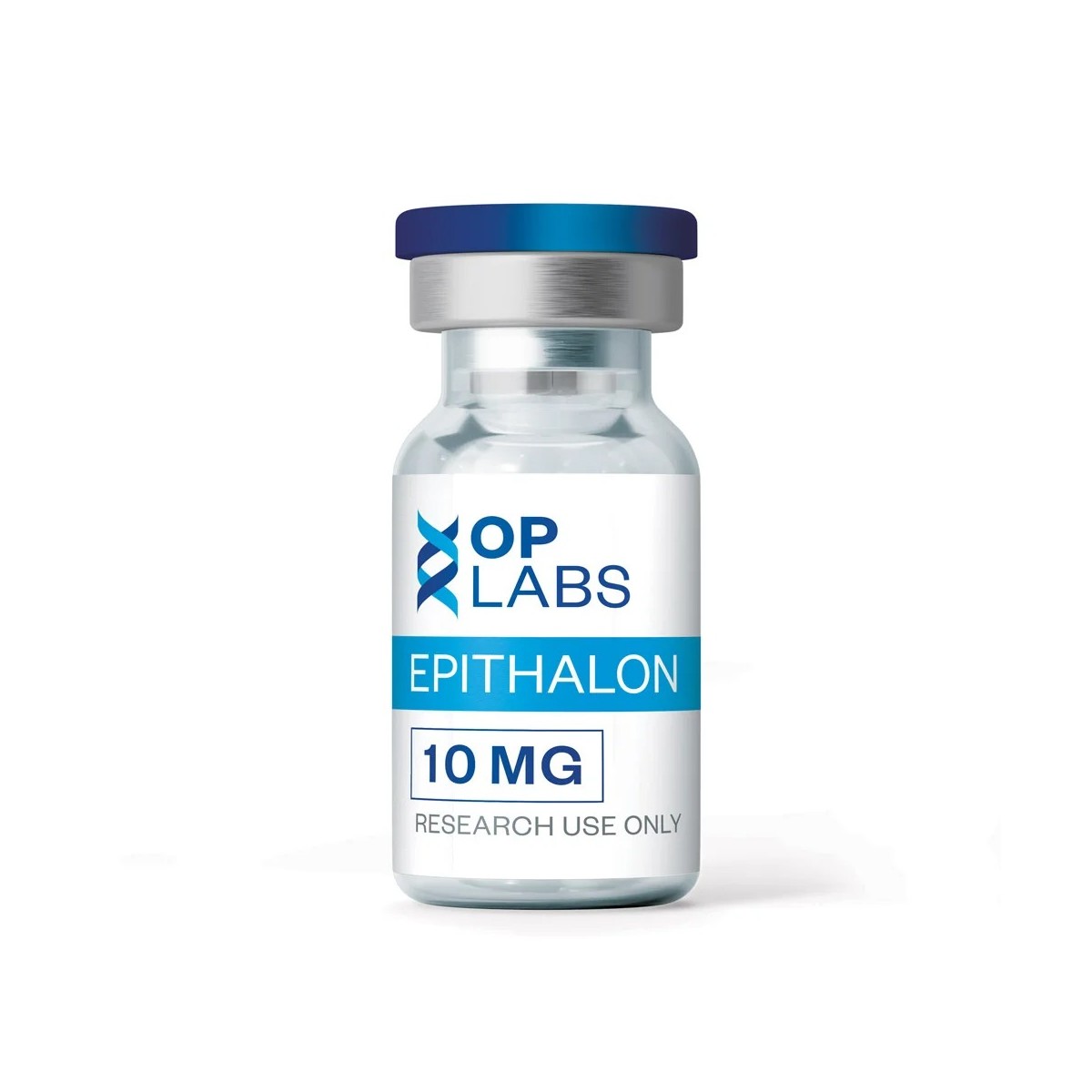

Epithalon is a synthetic tetrapeptide corresponding to a defined pineal-derived peptide sequence, developed for investigation of peptide-mediated nuclear and intracellular signalling in experimental systems.
Epithalon is a synthetic tetrapeptide corresponding to a defined amino acid sequence originally identified as an active fragment of epithalamin, a peptide preparation derived from pineal tissue in early experimental studies. It was developed to provide a chemically well-characterised molecule suitable for controlled investigation of short peptide signalling in cellular and molecular research systems.
In biochemical and cellular research models, Epithalon has been examined for its interactions with nuclear and chromatin-associated processes, including modulation of gene expression and telomere-related regulatory mechanisms. Experimental studies have investigated its influence on chromatin structure, telomerase-associated activity, and intracellular signalling pathways, with observed effects dependent on concentration, exposure duration, and model system. Epithalon is used as a molecular research tool to explore peptide-mediated regulation rather than defined biological or clinical outcomes.
Applications in Research
As a molecular probe for studying short peptide–mediated intracellular signalling
Investigation of chromatin organisation, gene expression regulation, and telomere-associated processes in cell models
In vitro studies examining peptide–nucleus interactions and regulatory pathways
As a reference compound in research involving pineal-derived peptide fragments
Precautions & Notes
Experimental behaviour of MOTS-c is influenced by metabolic state, cell type, and peptide concentration.
Buffer composition, pH, and ionic strength may affect peptide stability.
Appropriate controls are recommended.
Intended strictly for laboratory research use.
Epithalon is a synthetic tetrapeptide corresponding to a defined pineal-derived peptide sequence, developed for investigation of peptide-mediated nuclear and intracellular signalling in experimental systems.





@CUSTOMER_NAME@
@AUTHOR_PROFILE@ @COMMENT_ISO_COUNTRY@@COMMENT_TITLE@
@COMMENT_COMMENT@