
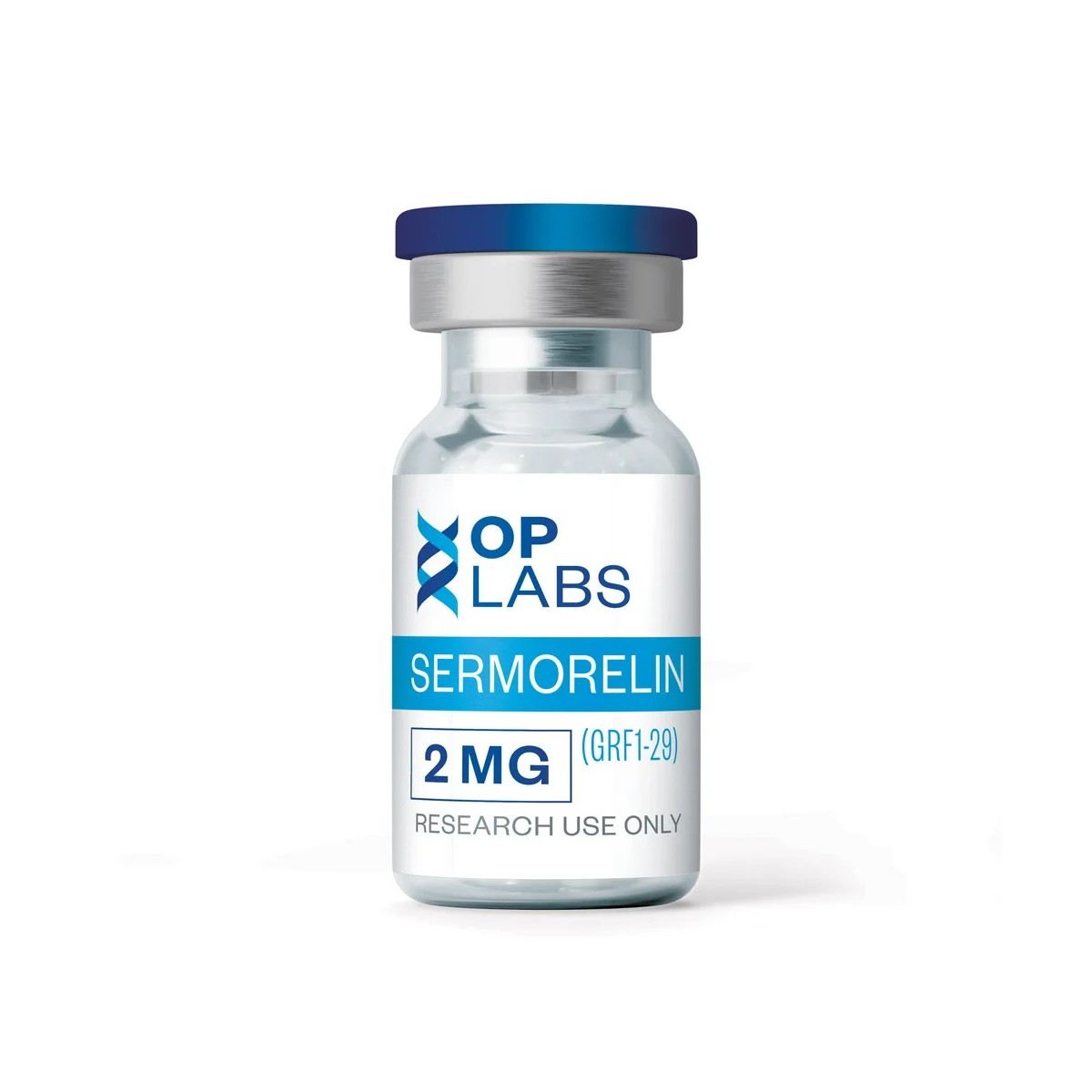
Sermorelin is a peptide analogue of growth hormone–releasing hormone (GHRH 1–29), used in experimental research to investigate hypothalamic–pituitary signalling, growth hormone secretion dynamics, and receptor-mediated neuroendocrine regulation.
Sermorelin is a synthetic peptide corresponding to the first 29 amino acids of endogenous human growth hormone–releasing hormone (GHRH). It represents the minimal biologically active fragment of GHRH and is used in research settings to investigate hypothalamic–pituitary signalling pathways involved in growth hormone regulation.
In biochemical and cellular research systems, Sermorelin interacts with the growth hormone–releasing hormone receptor (GHRH-R) expressed on pituitary somatotroph cells, initiating intracellular signalling cascades that regulate growth hormone synthesis and release. Experimental studies typically focus on receptor binding, signal transduction mechanisms, and comparative analysis relative to full-length GHRH. Observed effects are dependent on experimental design, concentration, and model system.
Applications in Research
Investigation of GHRH receptor binding and signalling pathways
Study of hypothalamic–pituitary axis regulation
In vitro comparison of truncated versus full-length GHRH peptides
Use as a reference compound in neuroendocrine and peptide signalling research
Precautions & Notes
Experimental behaviour of MOTS-c is influenced by metabolic state, cell type, and peptide concentration.
Buffer composition, pH, and ionic strength may affect peptide stability.
Appropriate controls are recommended.
Intended strictly for laboratory research use.
Sermorelin is a peptide analogue of growth hormone–releasing hormone (GHRH 1–29), used in experimental research to investigate hypothalamic–pituitary signalling, growth hormone secretion dynamics, and receptor-mediated neuroendocrine regulation.
@CUSTOMER_NAME@
@AUTHOR_PROFILE@ @COMMENT_ISO_COUNTRY@@COMMENT_TITLE@
@COMMENT_COMMENT@