
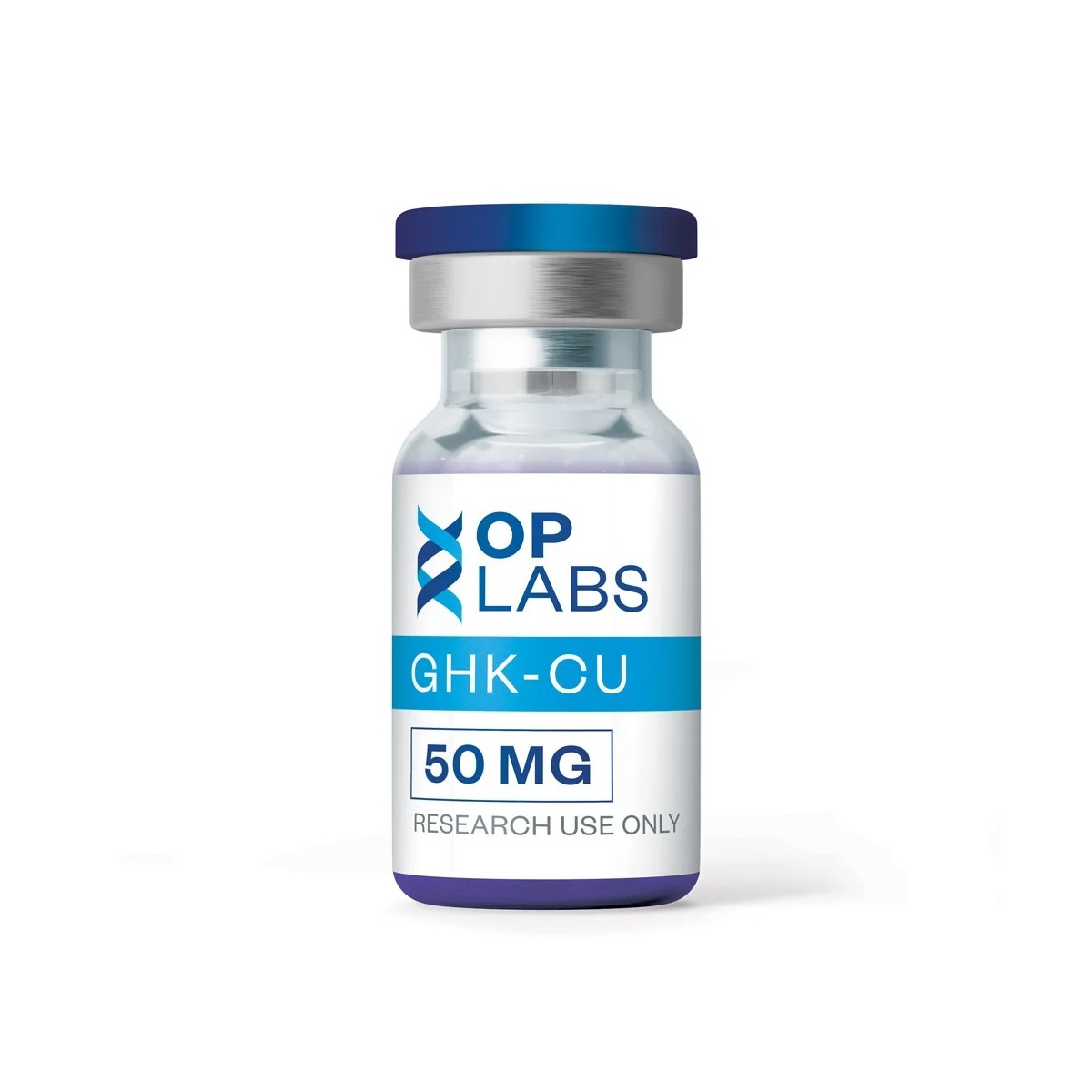
GHK-Cu is a specialised research peptide for scientific exploration of cellular signalling, extracellular matrix regulation, and mechanisms linked to skin, hair, and connective tissue biology.
GHK-Cu is a naturally occurring copper–peptide complex that functions as an endogenous signalling molecule involved in metal ion transport and cellular regulation. It consists of the tripeptide glycyl-L-histidyl-L-lysine complexed with a divalent copper ion, forming a high-affinity chelate that facilitates controlled copper delivery within biological systems. In biochemical and cellular research settings, GHK-Cu modulates cellular signalling processes through both peptide-mediated interactions and copper-dependent biochemical activity.
Copper is an essential trace element required for numerous enzymatic and structural proteins involved in redox balance, extracellular matrix organisation, and cellular metabolism. By acting as a carrier and regulator of bioavailable copper, GHK-Cu plays a role in maintaining metal homeostasis and influencing downstream pathways linked to cellular growth, differentiation, and tissue remodelling.
In preclinical research models, exposure to GHK-Cu has been associated with altered gene expression patterns and modulation of signalling pathways related to extracellular matrix dynamics, oxidative stress response, and cellular turnover. These effects are context-dependent and vary with concentration, exposure duration, and experimental system, making GHK-Cu a widely used molecular tool for investigating copper-mediated signalling and peptide–metal interactions in vitro and in vivo.
Applications in Research
As a molecular probe to study copper transport, binding, and homeostasis in biological systems.
To investigate copper-dependent signalling pathways involved in cellular growth, differentiation, and tissue remodelling.
In cell-based assays examining changes in gene expression, redox-sensitive signalling, and extracellular matrix regulation.
In animal or ex vivo experimental models for mechanistic investigation of peptide–metal interactions, copper bioavailability, and metal-mediated tissue signalling processes.
GHK-Cu is a specialised research peptide for scientific exploration of cellular signalling, extracellular matrix regulation, and mechanisms linked to skin, hair, and connective tissue biology.
@CUSTOMER_NAME@
@AUTHOR_PROFILE@ @COMMENT_ISO_COUNTRY@@COMMENT_TITLE@
@COMMENT_COMMENT@