
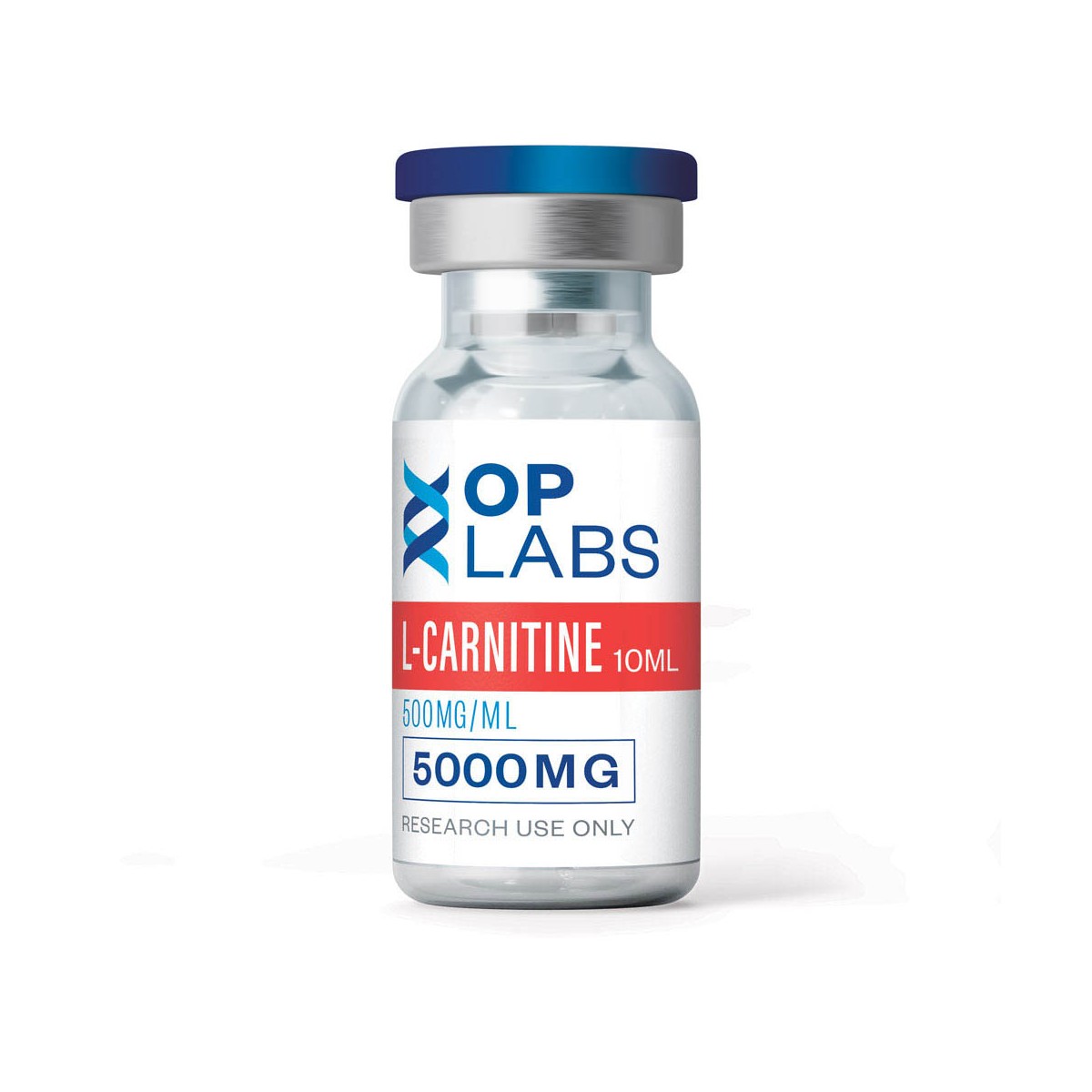

L-Carnitine is a well-characterised small-molecule compound used in biochemical and cellular research to investigate fatty acid transport, mitochondrial metabolism, and acyl-group transfer processes in experimental systems.
Synonyms / Designations: L-Carnitine, Levocarnitine, (R)-3-hydroxy-4-(trimethylazaniumyl)butanoate
CAS Number: 541-15-1
Molecular Formula: C7H15NO3
Molecular Weight: 161.20 g/mol
Chemical Classification: Naturally occurring quaternary ammonium compound; zwitterionic small molecule
Purity: Manufactured to ≥ 99 % chemical purity (typical, specification-based)
Appearance: Clear liquid.
Pack Size: 10ml
Storage: Store in a cool dark place. Discard 30 DAYS after opening.
L-Carnitine is a naturally occurring small molecule involved in mitochondrial fatty acid metabolism. In biochemical and cellular research systems, L-Carnitine functions as a carrier molecule facilitating the transport of long-chain fatty acids across the inner mitochondrial membrane via the carnitine shuttle mechanism.
Within experimental models, L-Carnitine participates in reversible esterification reactions with acyl-CoA derivatives, forming acylcarnitines that are translocated into the mitochondrial matrix for β-oxidation. This process is central to studies of cellular energy metabolism, mitochondrial function, and lipid handling under controlled laboratory conditions.
L-Carnitine is widely used as a reference compound in metabolic research due to its well-characterised chemical structure, stability, and conserved biochemical role across species.
Purity: ≥ 99 %
Appearance: Clear liquid
Molecular Weight: 161.20 g/mol
Chemical Type: Quaternary ammonium compound
Solubility: Water
Storage: Store in a cool dark place. Discard 30 DAYS after opening
Pack Size: 10ml
L-Carnitine is a well-characterised small-molecule compound used in biochemical and cellular research to investigate fatty acid transport, mitochondrial metabolism, and acyl-group transfer processes in experimental systems.





@CUSTOMER_NAME@
@AUTHOR_PROFILE@ @COMMENT_ISO_COUNTRY@@COMMENT_TITLE@
@COMMENT_COMMENT@