
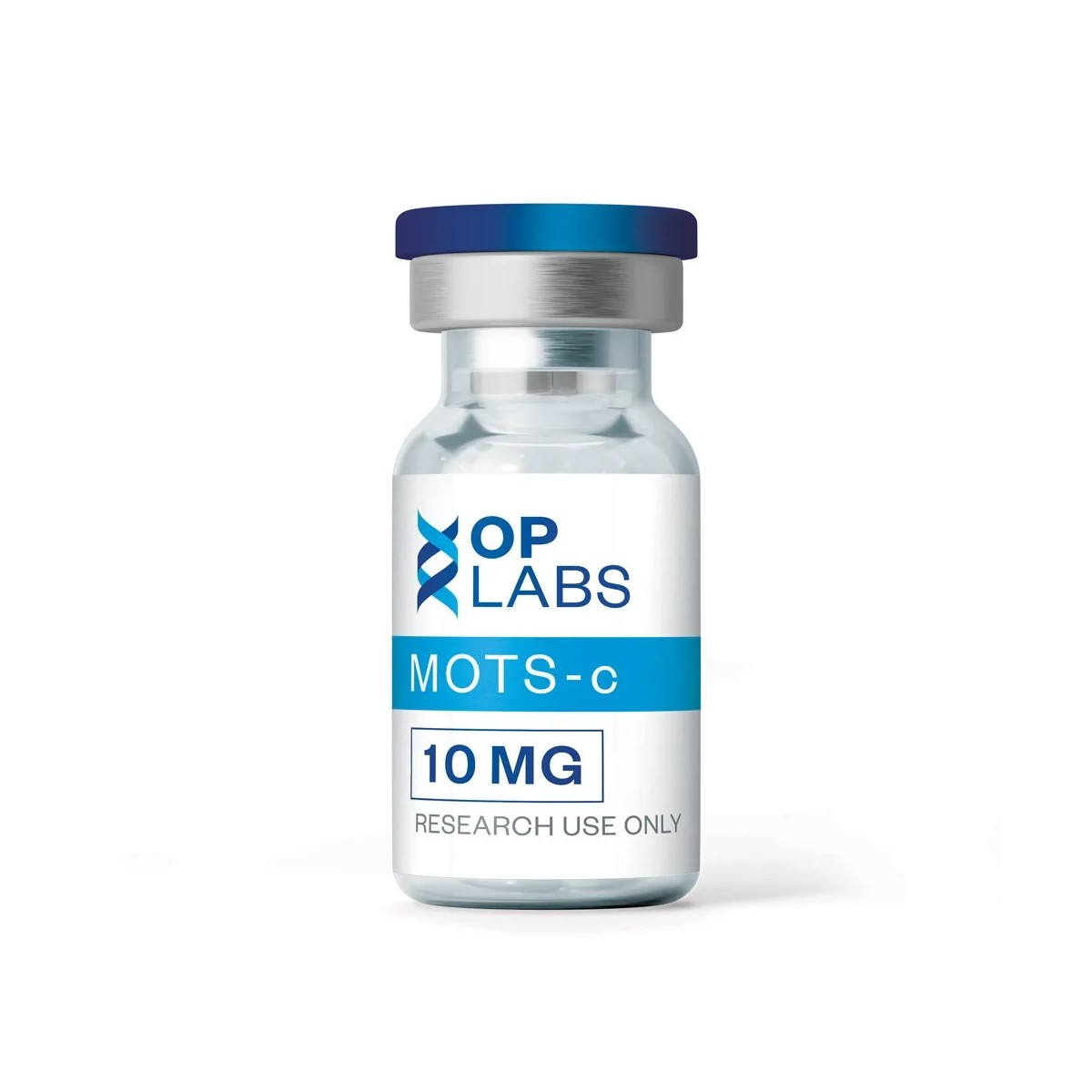


OP Labs MOTS-c 10mg.
MOTS-c is a synthetic peptide corresponding to a naturally occurring mitochondrial-derived peptide encoded within the mitochondrial 12S rRNA region. It is used in experimental research to investigate mitochondrial signalling, metabolic regulation, and nuclear–mitochondrial communication pathways.
In biochemical and cellular research systems, MOTS-c has been shown to influence intracellular signalling pathways associated with energy sensing, insulin signalling, and cellular stress responses. Experimental models examine its effects on AMPK activation, metabolic gene expression, and adaptive stress signalling. Observed molecular responses depend on concentration, exposure duration, and experimental model.
Synonyms / Designations: MOTS-c, Mitochondrial ORF of the Twelve S rRNA-c
CAS Number: 1627580-64-6
Molecular Formula: C101H152N28O22S2
Molecular Weight: ~2174.64 g/mol
Peptide Length: 16 amino acids
Peptide Type: Mitochondrial-derived regulatory peptide
Purity: ≥ 99 % (HPLC, typical)
Appearance: White to off-white lyophilised powder
Pack Size: 10 mg (typical)
Storage: Desiccated, protected from light, stored at –20 °C or below
Solubility: Soluble in water and buffered aqueous solutions
Applications in Research
As a molecular probe for studying mitochondrial-derived peptide signalling.
Investigation of metabolic regulation and energy homeostasis pathways.
In vitro studies examining mitochondrial–nuclear communication.
Use as a reference compound in metabolism and mitochondrial biology research.
Precautions & Notes
Experimental behaviour of MOTS-c is influenced by metabolic state, cell type, and peptide concentration.
Buffer composition, pH, and ionic strength may affect peptide stability.
Appropriate controls are recommended.
Intended strictly for laboratory research use.
OP Labs MOTS-c 10mg.




@CUSTOMER_NAME@
@AUTHOR_PROFILE@ @COMMENT_ISO_COUNTRY@@COMMENT_TITLE@
@COMMENT_COMMENT@